

How UK Investors Buy Property in Dubai in 2026
A practical guide to buying Dubai property as a UK investor in 2026. Covers freehold zones, off-plan vs ready, true costs, Golden Visa eligibility, and the mistakes that cost buyers money.
In this article
Dubai recorded AED 252 billion (approximately £54 billion) in real estate transactions in Q1 2026 alone, a 31 per cent increase year on year. UK buyers are consistently among the top five international buyer nationalities in the Dubai market, and the process of acquiring property from the UK is more straightforward than most expect. What separates a strong investment from a mediocre one is rarely the property itself. It is the quality of the decisions made in the first few weeks, before most buyers realise they have made them. The objective, the structure, the location, the choice of representation: these are settled early, often quietly, and they set the ceiling on everything that follows.
This guide is written for UK investors considering a meaningful allocation into Dubai real estate, typically AED 2 million and above, as part of a broader wealth strategy. It covers what the market requires of you, where the genuine decisions lie, and the mistakes I see capable people make repeatedly. It is the briefing I would give a client before we begin.
Who Can Buy Property in Dubai and Where
Foreign nationals can own property outright in Dubai, but only within government-designated freehold zones. This is the single most important structural fact for a UK buyer to understand. Within these zones, ownership is full and permanent, registered in your name, with the same rights of sale, lease, and inheritance you would expect at home. The established freehold areas include Dubai Marina, Downtown Dubai, Palm Jumeirah, Business Bay, Jumeirah Beach Residence, DIFC, Arabian Ranches, Dubai Hills Estate, Emaar Beachfront, and Dubai Creek Harbour. Almost every property a serious international investor would consider sits within one of these.
Outside the designated freehold zones, foreign ownership takes a different legal form. It is structured either as usufruct rights, which grant use and benefit of a property for a defined term of up to 99 years, or as musataha rights, which grant the right to build on and use land for a fixed period. These are legitimate arrangements, but they are not freehold, and they behave differently on resale and inheritance. A buyer should know precisely which form of ownership a property carries before any money moves. Dubai is also not the whole picture: Abu Dhabi, regulated by the Abu Dhabi Real Estate Centre (ADREC), and Ras Al Khaimah, regulated by the Real Estate Regulatory Administration (RERA) for RAK, operate their own freehold frameworks, so international buyers should confirm eligibility on an emirate-by-emirate basis.
The eligibility requirements are not onerous. A buyer must be at least 21 years of age, hold a valid passport, and be able to demonstrate proof of funds. For larger transactions and for off-plan purchases, anti-money laundering checks on the source of funds are standard practice, and a well-prepared buyer treats this as routine rather than an obstacle.

Off-Plan or Ready, the Decision That Shapes Everything
This is the decision most guides treat as a simple comparison of price against convenience. It is considerably more consequential than that, and it deserves real attention.
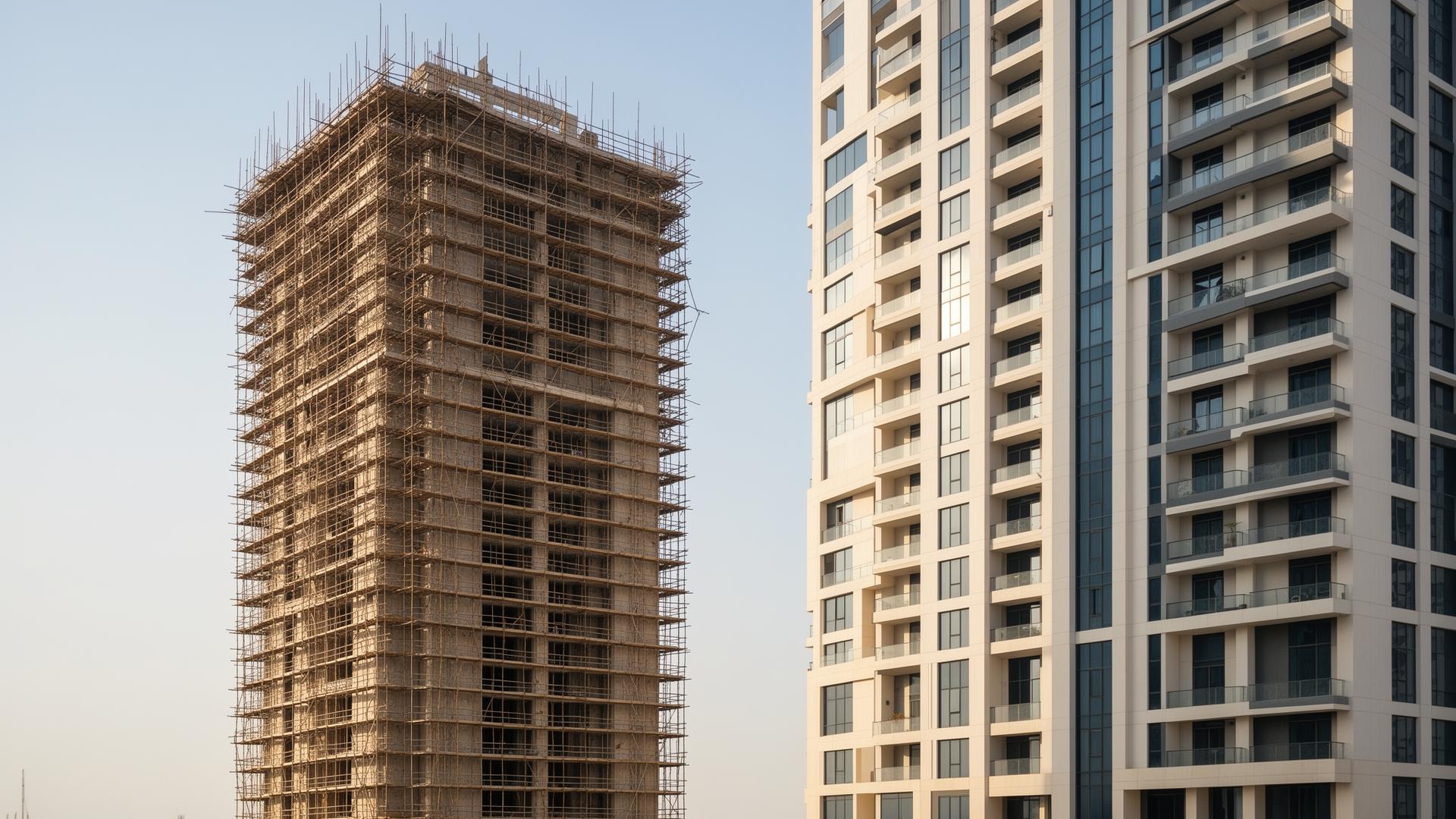
Off-plan means buying a property before or during construction, directly from the developer, on a staged payment plan. Typical structures include 60/40, 50/50, and 40/60 splits, the latter often with a portion deferred to post-handover tranches spread over one to three years after you take possession. The appeal is twofold. Entry pricing in the early phases of a launch is usually below the eventual market value, and the payment plan allows capital to be deployed gradually rather than in a single lump sum. The protection that most UK investors are unaware of is the escrow framework. Under Dubai Law No. 8 of 2007, developers are required to hold buyer funds in a RERA-supervised escrow account, with releases tied to verified construction milestones. Your money is not handed to the developer to spend freely; it is held against demonstrable progress. That changes the risk profile of off-plan considerably. The work that remains for the buyer is assessing the developer itself: years active in the market, number of completed projects, and a handover history that can be checked rather than taken on trust.
Ready property carries a different set of characteristics. The income potential is immediate, there is no completion risk, and what you view is what you own. Against that, the entry price is higher, there is little or no payment flexibility, and you are buying into the current market rather than ahead of it. Ready property suits a buyer who needs rental income from the outset, or one who is simply not comfortable holding construction exposure for two or three years.
The real question is not which of these is better in the abstract, because neither is. It is which structure suits your capital position, your timeline, your income requirements, and your tolerance for risk. A buyer who needs yield by month three has a genuinely different correct answer to a buyer with surplus capital and a five-year horizon. The error is choosing the structure first and reverse-engineering the objective to fit it.
The Buying Process
The process is logical and well-defined. It rewards preparation and punishes improvisation.

- Define the objective clearly before looking at anything. Yield, capital growth, a residency pathway, future relocation, family legacy planning, or some combination of these. The objective determines the asset class, the location, and the structure. Without it, the process becomes reactive, and reactive buyers overpay.
- Select location and asset type aligned with the objective. Waterfront stock and branded residences carry different yield profiles and liquidity characteristics from urban residential apartments or off-plan master-planned communities. The asset should follow the goal, not the other way around.
- Appoint a RERA-registered advisor or broker. RERA registration is a legal requirement for brokers operating in Dubai, and verification takes around thirty seconds on the RERA website. This is a baseline check, not optional diligence.
- Reservation. This typically involves a deposit of five to ten per cent of the purchase price, a signed Reservation Form, and a dated receipt. Before proceeding beyond this point, the draft Sales and Purchase Agreement should be reviewed carefully with a UAE-qualified property lawyer.
- Sales and Purchase Agreement. The SPA is the primary legal document governing the transaction. The terms that warrant close scrutiny are the payment schedule, the handover date, the penalties for developer delay, the defect liability period, and the force majeure provisions.
- No Objection Certificate. Issued by the developer to confirm there are no outstanding service charges or obligations attached to the property. This is standard in all secondary market transactions and in some primary market ones.
- Dubai Land Department registration. The transfer fee is four per cent of the purchase price, payable to the Dubai Land Department (DLD), and the title deed is issued in the buyer's name on completion. For off-plan purchases, registration is handled through Oqood, the DLD's off-plan registration system, until the property is handed over and a full title deed is issued.
- Post-completion. Property management, rental listing, short-let licensing through a DTCM permit if you intend to let on a short-term basis, or owner occupation. This plan should exist before completion, not be assembled afterwards.
The Real Cost of Buying in Dubai
Most articles on this subject are vague about cost. Precision matters here, because the gap between the headline price and the true cost of acquisition is where budgets quietly come undone.
- DLD transfer fee: four per cent of the purchase price. On a AED 3 million (approximately £645,000) property, that is AED 120,000 (approximately £25,800).
- DLD admin fee: AED 580 for apartments, AED 430 for land.
- Real estate agent commission: typically two per cent of the purchase price in the secondary market, and usually paid by the seller. In the primary, off-plan market, the developer typically pays the agent's commission, which means there is no direct cost to the buyer for working with a reputable advisory firm.
- No Objection Certificate fee: between AED 500 and AED 5,000, depending on the developer.
- Mortgage registration fee, if applicable: 0.25 per cent of the loan value.
- Property valuation fee for mortgage purposes: typically AED 2,500 to AED 3,500.
- Annual service charges: these vary significantly and are one of the most underestimated costs for first-time Dubai buyers. Waterfront and branded residences can carry service charges of AED 20 to AED 50 per square foot annually. On a 1,500 square foot apartment, that is AED 30,000 to AED 75,000 (approximately £6,450 to £16,100) per year, before any management or letting fees.

On the tax side, the UAE position is genuinely favourable. There is no stamp duty, no annual property tax, and no inheritance tax in the UAE on Dubai real estate. That said, a UK-resident buyer does not leave UK tax behind. Rental income from overseas property is subject to UK income tax and must be declared to HMRC, and capital gains on overseas property may be subject to UK capital gains tax depending on the buyer's residency and domicile status. The interaction between the two jurisdictions is specific to each individual's circumstances, and specialist cross-border tax advice is strongly recommended before completing any purchase.
The Golden Visa and What Property Ownership Actually Provides
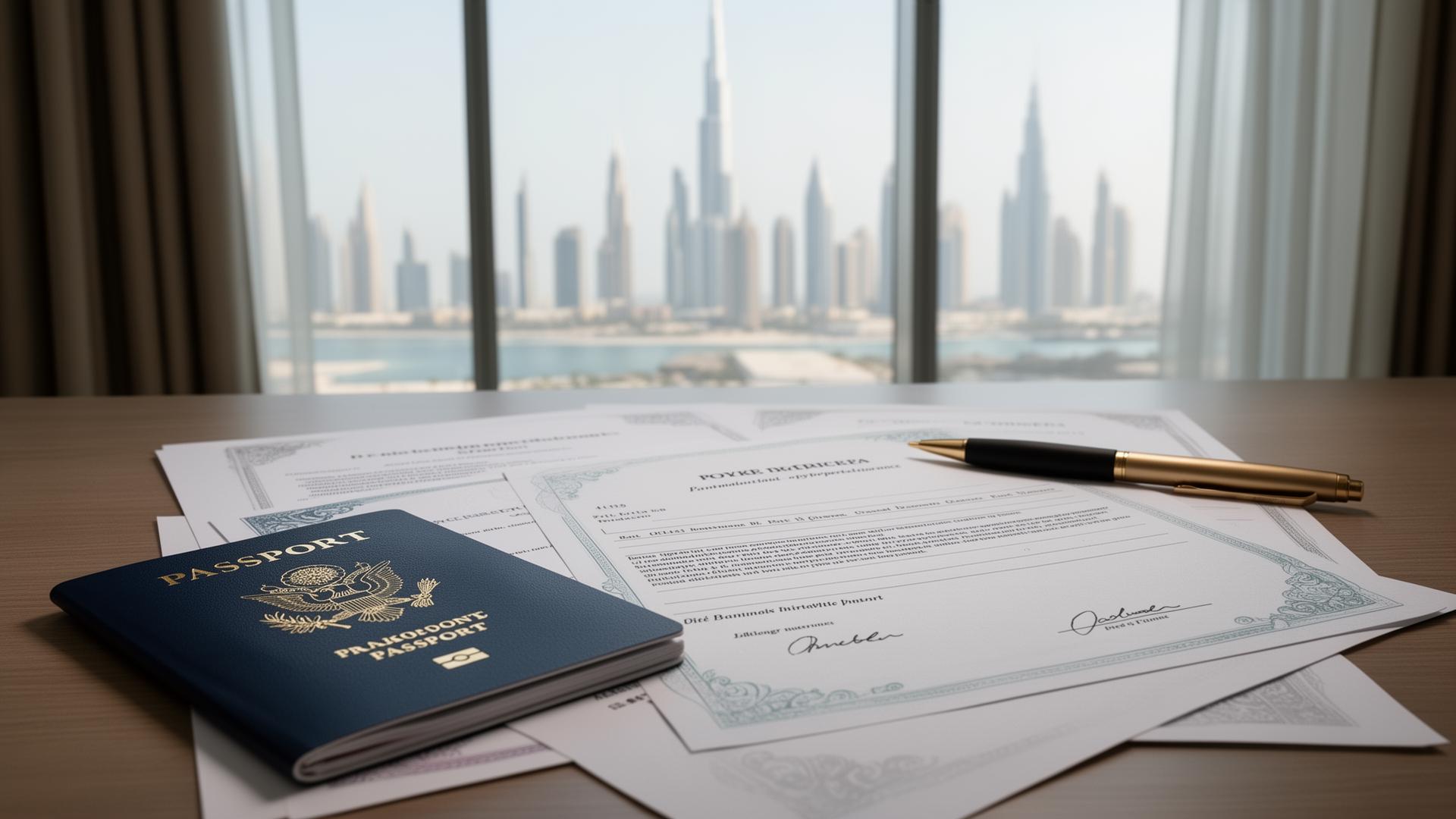
The UAE Golden Visa is a ten-year renewable residence visa, and for property buyers it is one of the more tangible benefits of ownership. The real estate pathway requires ownership of property with a minimum value of AED 2 million (approximately £430,000 at current rates). The property can be fully paid, or the paid portion must meet the AED 2 million threshold. A successful applicant can sponsor a spouse and dependent children under the same visa.
The Green Visa is a separate, five-year self-sponsored residence visa available to investors and skilled professionals. It operates under different eligibility criteria and does not carry the same property value threshold, so it is worth understanding as a distinct option rather than a lesser version of the same thing.
It is important to be precise about how the Golden Visa is obtained. Property ownership alone does not automatically confer it. The application must be submitted through the relevant UAE authority, either the Federal Authority for Identity, Citizenship, Customs and Ports Security (ICP) or the General Directorate of Residency and Foreigners Affairs (GDRFA), with full supporting documentation. A qualified PRO service or an advisory firm with residency experience can coordinate this process on the buyer's behalf, which removes most of the friction.
The Golden Visa should be understood for what it is. It is a genuine, usable long-term residency option for qualifying buyers, and for many of my clients it is a material part of the rationale for buying. It is not a fast-track to citizenship, and it does not remove a UK buyer's UK tax obligations. Treated realistically, it is valuable. Oversold, it leads to disappointment.
What UK Buyers Most Commonly Get Wrong

This is the section that matters most, because the mistakes below are not made by careless people. They are made by intelligent, successful buyers who simply did not have the local context to know what they did not know.
Choosing a developer based on marketing materials rather than delivery track record. Dubai has developers with twenty-plus years of verified completions, and it has developers who have never finished a project. The brochures look remarkably similar. A buyer who reserves a unit without verifying the developer's history is accepting a risk that a brief conversation with an experienced advisor would have removed entirely.
Modelling gross yield rather than net yield. A headline gross yield of seven per cent on an off-plan unit can become four to four and a half per cent net once service charges, property management fees, void periods, maintenance, and DTCM licensing fees are accounted for. The gross figure is the one in the marketing. The net figure is the one you actually live with. Model the net figure, every time, before you decide.
Underestimating currency exposure. The UAE dirham is pegged to the US dollar, not to sterling. AED 2 million at a GBP/AED rate of 4.65 costs approximately £430,000. At a rate of 4.40, the same purchase costs approximately £454,500. For a buyer funding from a UK account across a phased payment plan that runs two or three years, exchange rate movement is not a rounding error. It can meaningfully change the total sterling cost of the investment, and it should be planned for rather than discovered.
Attempting to buy without local representation. The primary market in Dubai moves quickly. Premium units in sought-after developments are frequently reserved within hours of launch, and the strongest allocations go to buyers with established developer relationships. UK buyers who approach the market without a locally connected advisor consistently miss the most attractive early-phase opportunities and end up buying in later, more expensive phases.
Assuming the legal framework mirrors the UK conveyancing process. It does not. There is no survey in the traditional sense for an off-plan purchase. The SPA is the primary protection document, and it has to be read carefully before signing rather than after. Once it is signed, withdrawing from the transaction typically means forfeiting the reservation deposit, and potentially incurring further financial penalties beyond that.
A Note on Working With an Advisor
The Dubai market contains thousands of registered and unregistered brokers, and the range of quality and independence is wide. RERA registration is the non-negotiable baseline, the point below which a conversation should not continue. Beyond that, the questions that actually matter are these: does the advisor hold direct relationships with the developers whose projects they recommend, do they work across multiple developers or simply move stock from a single source, and can they point to a track record of completed transactions with international clients. In the primary market, advisory fees are almost always paid by the developer, so there is no cost to the buyer for working with a properly connected advisory firm. The cost of working with the wrong one is considerably higher.

The buyers who secure the strongest allocations in Dubai are, with striking consistency, the ones who arrive prepared. That means a clear investment objective, finances structured for a cross-border purchase, and the right contacts in place before the right opportunity appears rather than after it has gone. The market does not reward hesitation, and it does not wait for buyers to get organised. If you are at an earlier stage of this process, the most efficient hour you can spend is a private discovery call: a focused conversation about your objective, your position, and whether Dubai is the right fit for what you are trying to build. You can review current opportunities or arrange a strategy call via calendly.com/hcapitaladvisory, or submit an enquiry at hcapitaladvisoryintl.com.

Discuss Your UAE Residency and Property Strategy
For UK and international investors considering UAE residency, property acquisition or private opportunities, Helen can help you understand the right next step.
Join Our WhatsApp Community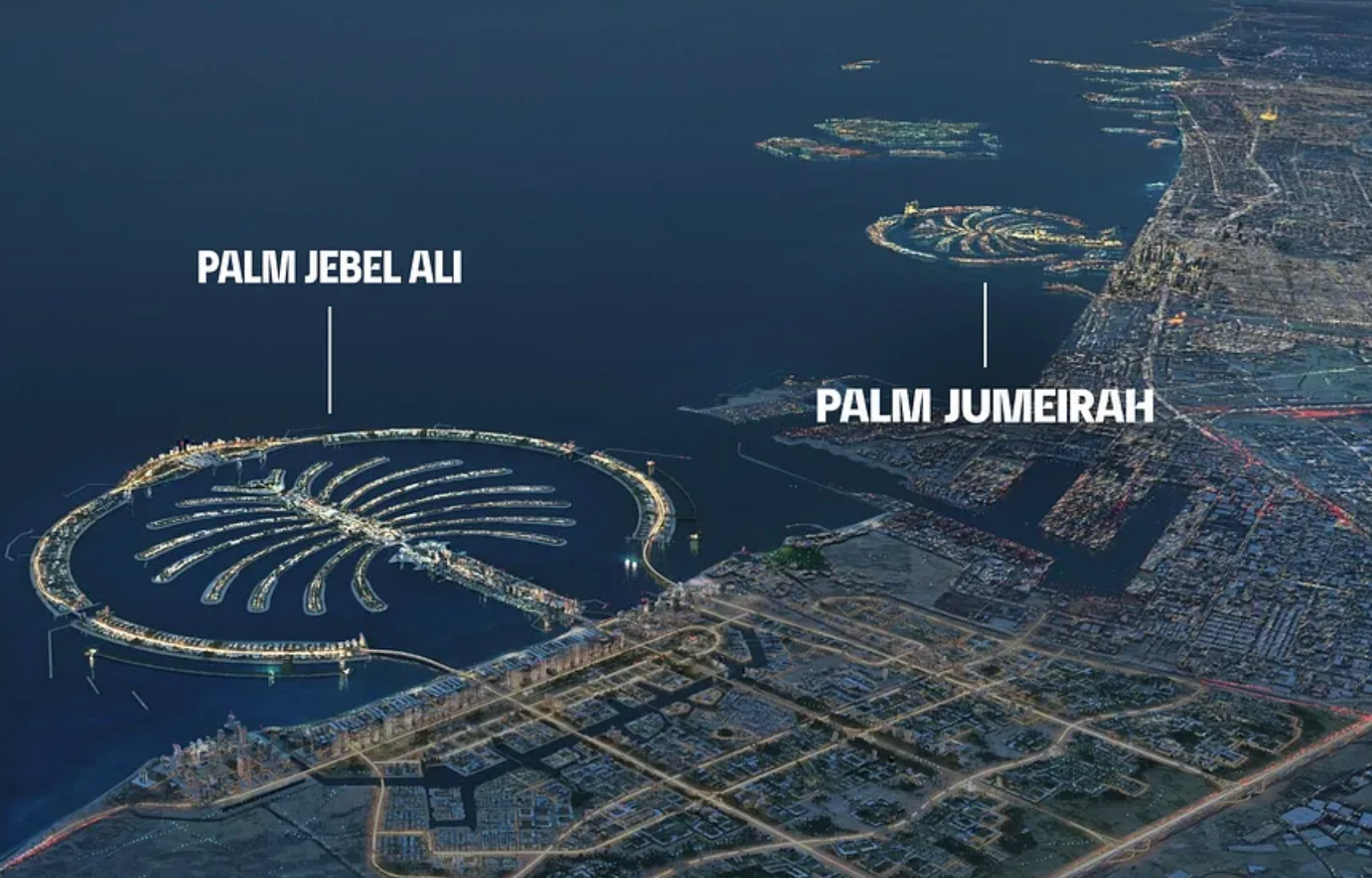
Palm Jumeirah vs Palm Jebel Ali: How the Two Islands Compare

The UAE Residential Market Is Settling Into a Different Phase